

Japandi Meets Tropical: How Singapore Cafes Are Blending Rattan, Solid Wood & Minimalist Forms in 2026
Singapore’s café scene has always been dynamic, but recent interior design trends reveal a clear direction for 2026: the fusion of Japandi minimalism with tropical materials. Known as Japandi Tropical, this aesthetic blends the calm simplicity of Japanese and Scandinavian design with Southeast Asian natural textures such as rattan and solid wood.
The result is a warm yet modern café environment that feels airy, welcoming, and timeless. More café owners are now incorporating carefully selected cafe furniture Singapore design studios recommend — pairing minimalist silhouettes with organic materials that thrive in the region’s climate.
In particular, durable cafe chairs Singapore cafés select often feature rattan weaving, solid teak frames, or clean Scandinavian forms, while outdoor restaurant furniture terraces adopt similar natural palettes to maintain visual harmony.
This article explores how Japandi Tropical design works, why it suits Singapore’s café culture, and how furniture choices bring the concept to life.
Understanding the Japandi Design Philosophy
Japandi is a hybrid interior style combining Japanese minimalism with Scandinavian functionality. Both design philosophies emphasise simplicity, craftsmanship, and natural materials.
Japanese design traditionally focuses on balance, quiet elegance, and connection with nature. Scandinavian interiors share similar values but introduce warmer tones and practical functionality suited to modern living.
When applied to café spaces, the result is an atmosphere that feels calm and uncluttered while remaining comfortable and inviting.
Singapore’s café culture naturally aligns with this philosophy. Many patrons seek environments where they can enjoy coffee slowly, work on laptops, or meet friends in a relaxed setting. Japandi-inspired cafe furniture concepts help create that serene yet stylish atmosphere.
Why Tropical Materials Complete the Japandi Look
While Japandi originated from cooler climates, tropical adaptations are necessary for Southeast Asia. In Singapore, designers frequently integrate regional materials that perform well in humid conditions.
Rattan, teak, and bamboo are among the most popular materials used in tropical café interiors. These materials introduce texture and warmth while remaining lightweight and breathable.
For example, woven rattan backs on durable cafe chairs establishments install add visual softness to minimalist forms. Solid wood tabletops enhance the organic feel while maintaining structural strength.
Outdoor seating areas also benefit from these materials. Outdoor restaurant furniture cafés choose often incorporates treated rattan or weather-resistant wood to ensure longevity in semi-open environments.
The Rise of Natural Wood Café Furniture
Solid wood has become a defining feature of Japandi Tropical café interiors. Light oak tones and warm teak finishes provide subtle contrast against neutral walls and polished concrete floors.
Wood furniture introduces visual warmth without overwhelming the minimalist design approach. Tables with simple rectangular profiles or rounded edges help maintain the understated aesthetic typical of Japandi spaces.
From a practical perspective, solid wood tables offer durability and longevity when properly sealed. Their natural grain patterns also give each table unique character, reinforcing the handcrafted feel many modern cafés want to achieve.
Designers working with cafe furniture Singapore suppliers increasingly favour wood pieces that showcase natural textures rather than heavy varnishes or artificial finishes.
Rattan Seating: A Timeless Tropical Element
Rattan has long been associated with Southeast Asian furniture, but its resurgence in modern café interiors reflects renewed appreciation for handcrafted materials.
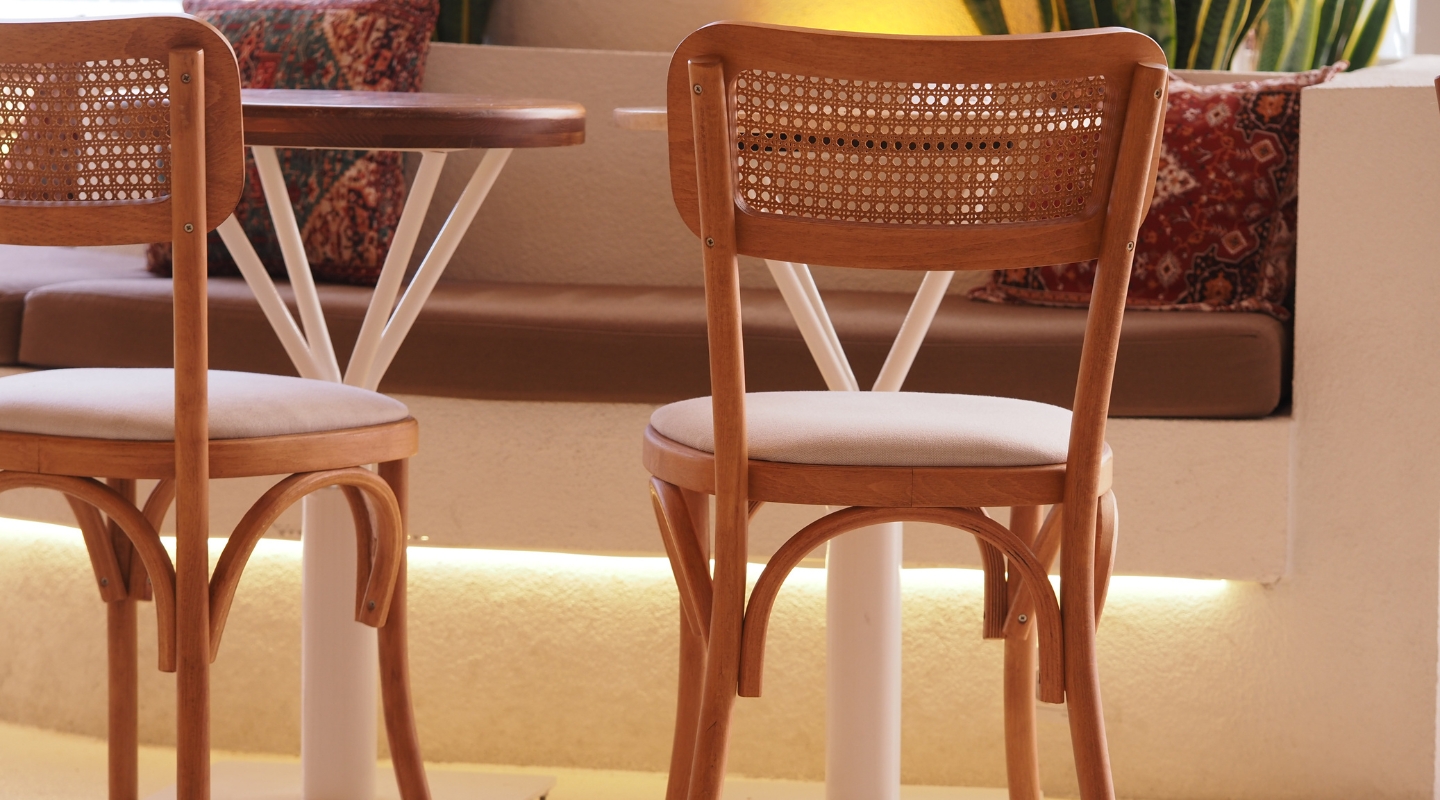
In Japandi Tropical spaces, rattan is often used sparingly to create subtle visual interest. For example, dining chairs may feature rattan panels framed by slim wooden structures.
These durable cafe chairs cafés incorporate balance lightweight construction with surprising resilience. Properly woven rattan provides both comfort and breathability, making it ideal for warm climates.
Rattan furniture also complements natural lighting, which many cafés intentionally emphasise through large windows or open terraces.
Minimalist Chair Forms for Modern Cafés
Another hallmark of Japandi-inspired interiors is simplicity in furniture design. Clean lines, gentle curves, and uncluttered silhouettes define most seating pieces.
Instead of bulky upholstered chairs, many cafés prefer minimalist wooden or composite designs that feel visually light. This approach enhances spatial openness and supports flexible seating arrangements.
When selecting cafe furniture projects require, designers often combine minimalistic frames with subtle ergonomic contours to ensure customer comfort during extended visits.
Such designs encourage guests to linger longer — an important factor in cafés where ambience contributes to brand identity.

Extending Japandi Style to Outdoor Seating
Many Singapore cafés feature outdoor or semi-outdoor seating areas, particularly in shophouse districts or lifestyle malls. Maintaining design continuity between indoor and outdoor zones enhances overall customer experience.
Outdoor restaurant furniture patios adopt frequently mirrors the Japandi Tropical aesthetic through neutral colour palettes and natural materials.
Weather-resistant aluminium frames paired with rattan-inspired weaving offer durability while preserving the organic look. Teak tables are another popular option due to their natural resistance to moisture and temperature changes.
These materials allow cafés to maintain cohesive design language across both indoor and outdoor spaces.
Colour Palettes That Define the Japandi Café Look
Colour plays a subtle yet important role in Japandi interiors. Rather than bold tones, designers favour soft neutrals that create calm visual environments.
Common colour combinations include warm beige, sand tones, light wood shades, and muted greys. Occasional dark accents — such as charcoal chair frames or black metal table bases — add depth without overwhelming the space.
When selecting durable cafe chairs designers specify, colours are often chosen to complement these earthy palettes.
The result is a café atmosphere that feels peaceful, balanced, and visually cohesive.
Balancing Aesthetics with Durability
While Japandi design emphasises beauty and craftsmanship, café furniture must also endure constant daily use. Chairs are frequently moved, tables are exposed to spills, and outdoor furniture faces humidity and rainfall.
Therefore, selecting cafe furniture hospitality environments require involves balancing aesthetic appeal with durability.
Commercial-grade finishes, reinforced joinery, and protective coatings help ensure furniture maintains its appearance even in busy dining settings.
Suppliers such as Rasa Bloom assist café owners in sourcing furniture that aligns with Japandi aesthetics while maintaining the strength required for hospitality environments.
How Japandi Furniture Supports Café Branding
Interior design plays a major role in shaping café identity. Many establishments rely heavily on visual storytelling through Instagram-friendly interiors.
Japandi Tropical spaces photograph beautifully due to their clean composition, natural lighting, and textured materials. Rattan chairs, wooden tables, and minimalist layouts create visually calming environments that appeal to modern audiences.
This design approach has become particularly popular among specialty coffee cafés, lifestyle bakeries, and boutique brunch concepts across Singapore.
Choosing the right durable cafe chairs establishments feature in their interiors can therefore contribute not only to comfort but also to marketing appeal.
Long-Term Value of Well-Chosen Café Furniture
Although minimalist furniture may appear simple, high-quality construction ensures it remains functional for years. Durable materials such as solid wood and reinforced rattan withstand repeated use while maintaining structural integrity.
Café owners who invest in well-designed outdoor restaurant furniture Singapore terraces require often benefit from reduced replacement costs over time.
Professional suppliers like Rasa Bloom help translate design concepts into practical furniture selections that support both aesthetics and longevity.
Conclusion
The fusion of Japandi minimalism with tropical materials is shaping the next wave of café design in Singapore. By combining natural textures such as rattan and solid wood with clean minimalist forms, cafés create environments that feel calm, modern, and inviting.
Thoughtfully selected cafe furniture designers specify plays a crucial role in achieving this balance. From elegant durable cafe chairs interiors showcase to cohesive outdoor restaurant furniture terrace layouts, each element contributes to the overall dining experience.
As café culture continues to evolve, Japandi Tropical design offers a timeless approach that celebrates simplicity, craftsmanship, and connection with nature.
Frequently Asked Questions
1. What is Japandi design in café interiors?
Japandi combines Japanese minimalism with Scandinavian functionality, creating calm spaces defined by natural materials and simple forms.
2. Why is rattan popular in Singapore café furniture?
Rattan is lightweight, breathable, and visually warm, making it well suited to tropical climates and relaxed café atmospheres.
3. Is solid wood suitable for café tables?
Yes. Properly sealed solid wood offers durability while adding natural texture and warmth to café interiors.
4. Can Japandi furniture be used outdoors?
Certain materials such as treated teak or aluminium frames with rattan-style weaving are suitable for outdoor seating areas.