

Cost-Per-Seat Analysis for Restaurant Furniture Investment in Singapore
When planning a new restaurant, café, or F&B renovation, furniture is often one of the most significant investments. While many owners focus on the upfront cost of tables and chairs, the more strategic approach is to evaluate cost-per-seat — a method that measures the long-term value, durability, and profitability of your restaurant furniture.
Cost-per-seat analysis helps determine how much each customer seat costs your business over its useful lifespan, allowing you to allocate budgets accurately and avoid overspending or underspending on furnishings. This framework is widely used by F&B operators across Singapore, from small cafés to large franchise chains, because it improves financial planning and ensures predictable ROI.
Whether you’re planning to buy restaurant furniture for a new setup or upgrading to more durable commercial dining furniture in Singapore, understanding cost-per-seat is essential to making an informed, profitable choice. Rasa Bloom, a trusted furniture partner for both new and established F&B brands, incorporates this analysis into its recommendations to help businesses optimise every dollar spent.
What Is Cost-Per-Seat Analysis?
Cost-per-seat analysis breaks down the total cost of furnishing your restaurant into a cost per usable dining seat. It considers not only the purchase price but also durability, maintenance, replacement rates, and overall life expectancy of the furniture.
This framework helps you:
• Compare different furniture materials and price ranges
• Understand long-term cost efficiency
• Avoid frequent repairs or replacements
• Improve budgeting accuracy
• Evaluate supplier options objectively
Instead of simply choosing the cheapest option, cost-per-seat analysis encourages a long-term perspective. A slightly more expensive commercial-grade chair may offer a lower cost-per-seat over time due to increased durability and reduced replacements.
Why Cost-Per-Seat Matters for the F&B Industry
In Singapore’s high-competition F&B landscape, every operational expense must contribute to revenue. Furniture plays a vital role because:
It supports customer comfort and turnover rate.
It influences restaurant branding and ambience.
It affects operational workflow and seating capacity.
It must withstand heavy daily usage in an F&B setting.
A well-chosen chair or table isn’t just a functional item – it’s a profit-generating asset. Cost-per-seat helps business owners quantify the true value of that asset.
How to Calculate Cost-Per-Seat
Cost-per-seat follows a straightforward formula:
Cost-per-seat = Total furniture investment ÷ Number of usable dining seats
But a more accurate formula incorporates lifespan and replacement factors:
Total cost-per-seat = (Initial cost + Maintenance + Replacement cost) ÷ Total usable years
Here is a simplified example:
If a restaurant spends $10,000 furnishing 40 seats:
Cost-per-seat = $10,000 ÷ 40 = $250 per seat
But if those chairs last 5 years, the annual cost-per-seat becomes:
$250 ÷ 5 = $50 per seat per year
This offers a more realistic understanding of long-term value.

Key Factors That Influence Cost-Per-Seat
Several elements affect cost-per-seat beyond the upfront furniture price. Below are the most critical considerations for F&B operators:
Durability and Material Quality
Commercial furniture must withstand:
• High seating turnover
• Daily cleaning
• Spills and stains
• Heavy loads
• Tropical humidity
Materials such as metal, polypropylene, and treated wood typically offer longer lifespans, reducing cost-per-seat. Investing in commercial dining furniture in Singapore ensures better performance than using residential-grade pieces.
Design and Comfort
Furniture design influences customer behaviour:
• Comfortable seating increases dwell time
• Efficient layout improves seat turnover
• Ergonomic chairs reduce replacement costs
Balancing comfort with space optimisation improves revenue per square foot.
Maintenance Cost
Some materials require regular maintenance:
• Wood may need varnishing
• Upholstery requires cleaning
• Metal may need rust protection
Choosing materials with lower maintenance needs lowers total cost-per-seat.
Replacement Frequency
A cheaper chair that breaks every 1–2 years can cost more than a durable premium option that lasts 7–10 years. Replacement cost includes:
• Purchasing a new item
• Logistics and transportation
• Downtime or temporary seat loss
Longer-lasting commercial-grade furniture provides a significantly lower cost-per-seat over time.
Warranty and Supplier Reliability
A reliable supplier like Rasa Bloom provides:
• Manufacturer warranty
• Quality-tested materials
• Consistent supply for replacement pieces
• Professional consultation
Good warranty coverage reduces unexpected expenses.
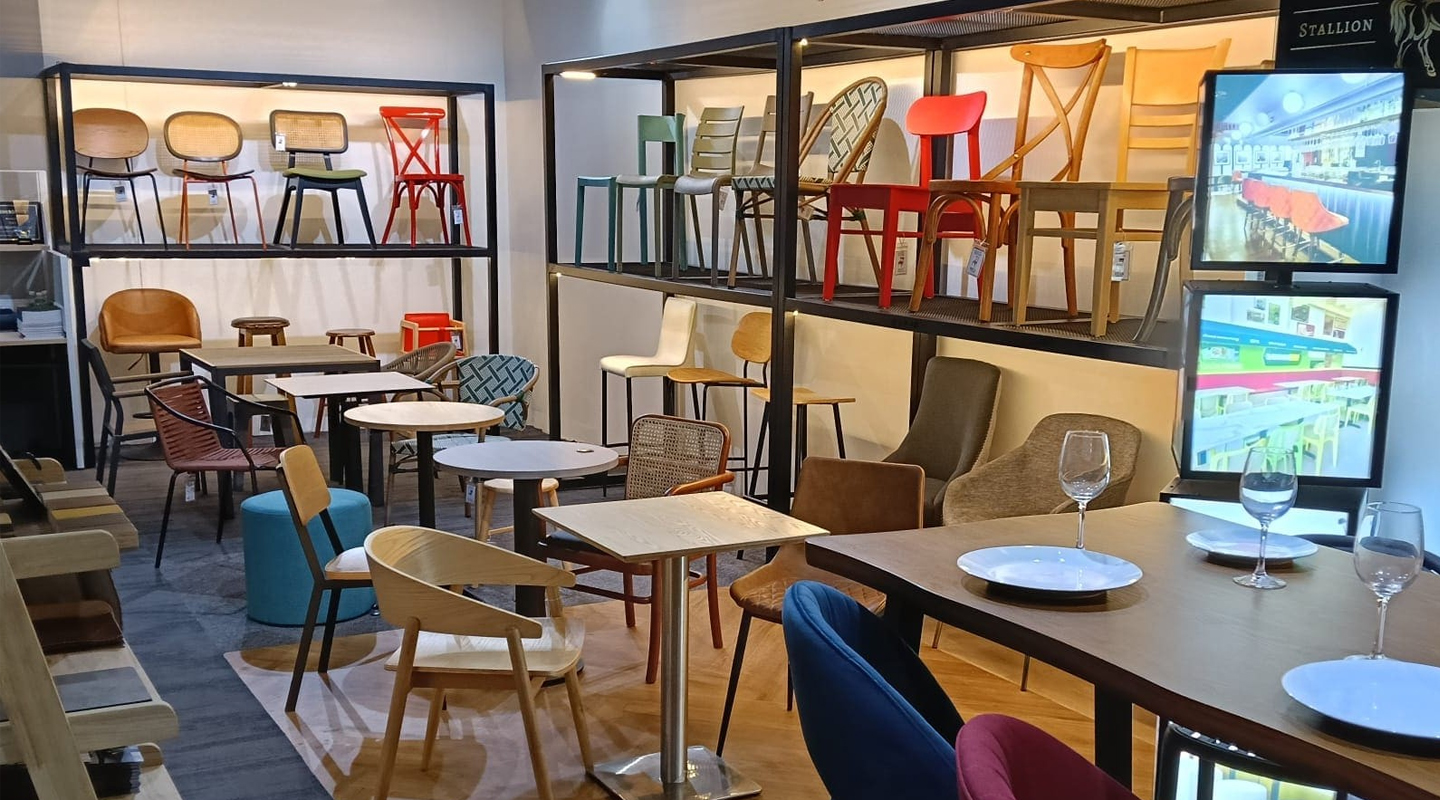
Comparing Different Furniture Categories
To illustrate cost differences, here is a breakdown of typical seating options used in Singapore F&B establishments.
Plastic or Polypropylene Chairs
• Affordable
• Lightweight and easy to clean
• Suitable for fast-food, cafés, and outdoor dining
Lifespan: 3–6 years
Cost-per-seat: Low
Metal Chairs
• Strong and stable
• Excellent for industrial or minimalist themes
• Great durability for high-traffic restaurants
Lifespan: 5–10 years
Cost-per-seat: Very low
Wooden Chairs
• Aesthetic and premium appeal
• Great for restaurants, bakeries, and cafés
• Requires regular maintenance
Lifespan: 4–8 years
Cost-per-seat: Moderate
Upholstered Chairs
• Comfortable and luxurious
• Suitable for fine dining, lounges, and hotels
• Higher maintenance
Lifespan: 3–7 years
Cost-per-seat: High
Outdoor Chairs (Aluminium or Rattan Style)
• Weather-resistant
• UV and rust protection
• Good for alfresco dining areas
Lifespan: 4–8 years
Cost-per-seat: Low to moderate
Choosing the right category based on your concept and budget significantly impacts cost-per-seat.
Increasing ROI With Strategic Seating Choices
Beyond choosing durable materials, the following strategies help minimise long-term cost-per-seat.
Optimise Seating Layout
Efficient spacing can increase total seating capacity, lowering overall cost-per-seat. A layout expert or furniture consultant from Rasa Bloom can help determine:
• Ideal seat spacing
• Table proportions
• Traffic flow routes
• Maximum occupancy without overcrowding
More seats = lower cost-per-seat overall.
Choose Stackable or Modular Furniture
Stackable chairs reduce storage costs and improve flexibility for events. Modular tables allow quick reconfigurations, increasing revenue opportunities.
Examples:
• Combine tables for large groups
• Separate them during off-peak hours
• Store unused seats during morning periods
This versatility extends furniture lifespan.
Use Commercial-Grade Finishes
Commercial-grade coating, varnish, and metal treatments extend durability significantly. They prevent:
• Scratches
• Rust
• Wear and tear
• Color fading
This reduces yearly depreciation and keeps cost-per-seat low.
Buy From a Trusted Supplier
When you buy restaurant furniture in Singapore from an established provider like Rasa Bloom, you benefit from:
• Bulk purchase discounts
• High-quality manufacturing
• Better construction standards
• Long-term replacement availability
Reliable suppliers ensure consistency in design, durability, and quality.
Case Study: Cost-Per-Seat Improvement Example
A café purchases 50 wooden chairs at $120 each.
Initial cost-per-seat: $120
Expected lifespan: 4 years
Annual cost-per-seat: $30
After switching to commercial-grade metal chairs at $180 each:
Initial cost-per-seat: $180
Expected lifespan: 8 years
Annual cost-per-seat: $22.50
Although the initial investment is higher, long-term savings are significant due to durability and reduced replacements.
This example highlights the importance of evaluating lifespan rather than price alone.
Rasa Bloom’s Approach to Cost-Per-Seat Optimisation
Rasa Bloom supports Singapore F&B businesses by helping them make smart, cost-effective furniture decisions. Their approach includes:
• Assessing your restaurant concept and seating goals
• Recommending commercial dining furniture designed for heavy usage
• Providing bulk discounts for large orders
• Ensuring consistent quality for multi-outlet brands
• Offering durable materials to extend lifespan
By focusing on long-term ROI, Rasa Bloom ensures every seat contributes positively to revenue.
Frequently Asked Questions
How many seats should a typical restaurant budget for?
Most restaurants in Singapore allocate 60–70% of their space to seating. The number of seats depends on layout, customer flow, and concept.
Is expensive furniture always better for cost-per-seat?
Not necessarily. The key is durability. A moderately priced, well-constructed commercial-grade chair can outperform a premium but delicate design.
How often should restaurant furniture be replaced?
On average, every 5–7 years. However, high-quality commercial dining furniture can last over 10 years with proper care.
Do bulk purchases reduce cost-per-seat?
Yes. Bulk buying often results in lower unit costs, reduced delivery fees, and more consistent product quality, improving long-term ROI.