

Outdoor Restaurant Furniture Materials Guide: Aluminium, Teak, HDPE & Rattan for Tropical Climates
Outdoor dining has become an increasingly valuable extension of restaurant space. From café terraces and garden patios to rooftop lounges and waterfront decks, exterior seating allows food establishments to welcome more guests while offering a relaxed dining atmosphere that indoor spaces cannot replicate.
However, outdoor furniture faces environmental pressures far beyond what interior furnishings experience. Constant humidity, intense sunlight, sudden rain showers and heavy daily use all place stress on materials. Choosing the wrong furniture can lead to rapid deterioration, faded finishes, and unstable seating within a short period of time.
For this reason, the materials used in commercial grade restaurant furniture play a crucial role in long-term performance. The right choice ensures outdoor seating remains durable, attractive and safe even under demanding conditions.
This guide explores four of the most widely used materials for outdoor restaurant furniture Singapore establishments rely on—aluminium, teak, HDPE and synthetic rattan—examining how each performs in a tropical environment.
Why Material Choice Matters for Outdoor Dining Areas
Indoor furniture is primarily protected from weather fluctuations. Outdoor furniture, on the other hand, must withstand constant exposure to natural elements while still maintaining comfort and visual appeal.
High humidity can accelerate corrosion on certain metals. Strong ultraviolet radiation causes many plastics and fabrics to fade or crack. Sudden downpours demand materials that dry quickly and resist water damage.
Restaurants that carefully evaluate furniture materials from the start often enjoy significantly longer product lifespans. This reduces the need for frequent replacements and helps maintain a consistent appearance across outdoor seating areas.
Durability also affects safety. Chairs and tables exposed to outdoor conditions must remain structurally stable even after years of daily use.

Aluminium: Lightweight Strength for Busy Outdoor Areas
Aluminium has become one of the most widely used materials in hospitality furniture for outdoor settings. Its popularity comes from a combination of durability, corrosion resistance and ease of handling.
Unlike steel, aluminium naturally resists rust. This makes it particularly suitable for humid climates where moisture exposure is unavoidable.
Another advantage is its lightweight construction. Staff can rearrange seating quickly to accommodate different group sizes or event layouts without heavy lifting.
Powder-coated aluminium frames are commonly used in patio chairs, café tables and bar stools. The coating protects the metal while offering a wide range of colour options that complement modern restaurant aesthetics.
Many restaurant owners appreciate aluminium furniture for several practical reasons:
Resistant to rust and moisture
Easy to move and rearrange
Minimal maintenance requirements
Suitable for contemporary design concepts
When built to commercial standards, aluminium furniture offers excellent durability while maintaining a clean, modern appearance.

Teak: Natural Elegance with Exceptional Durability
Teak is widely regarded as one of the most durable natural woods available for outdoor furniture. Its high oil content provides natural resistance to moisture, insects and decay.
Historically used in shipbuilding, teak has long proven its ability to withstand harsh environmental conditions. This makes it particularly suitable for restaurant terraces and garden dining areas where natural aesthetics are preferred.
Over time, teak develops a soft silver-grey patina when exposed to sunlight. Some restaurant owners appreciate this weathered look because it adds character and a sense of authenticity to outdoor spaces.
Those who prefer the original warm tone can apply teak oil periodically to maintain its colour.
Teak furniture is often found in settings such as:
Resort-style patios
Coastal restaurants
Outdoor brunch cafés
Garden dining environments
While teak typically comes at a higher upfront cost, its longevity makes it a worthwhile investment for restaurants seeking both durability and timeless visual appeal.

HDPE: Modern Synthetic Material Built for Weather Resistance
High-Density Polyethylene (HDPE) has gained significant popularity in recent years as a reliable material for outdoor furniture. Unlike standard plastic, HDPE is engineered specifically for long-term durability and environmental exposure.
This material is commonly manufactured from recycled polymers and then moulded into sturdy seating structures that resist cracking, fading and moisture absorption.
HDPE furniture offers several advantages for outdoor dining areas. It does not splinter like wood, resists UV damage, and requires very little maintenance beyond routine cleaning.
Another benefit is colour stability. Because pigments are integrated into the material during production, the colour remains consistent even after prolonged exposure to sunlight.
Restaurants with heavy outdoor traffic often favour HDPE furniture because it combines durability with practical maintenance requirements.
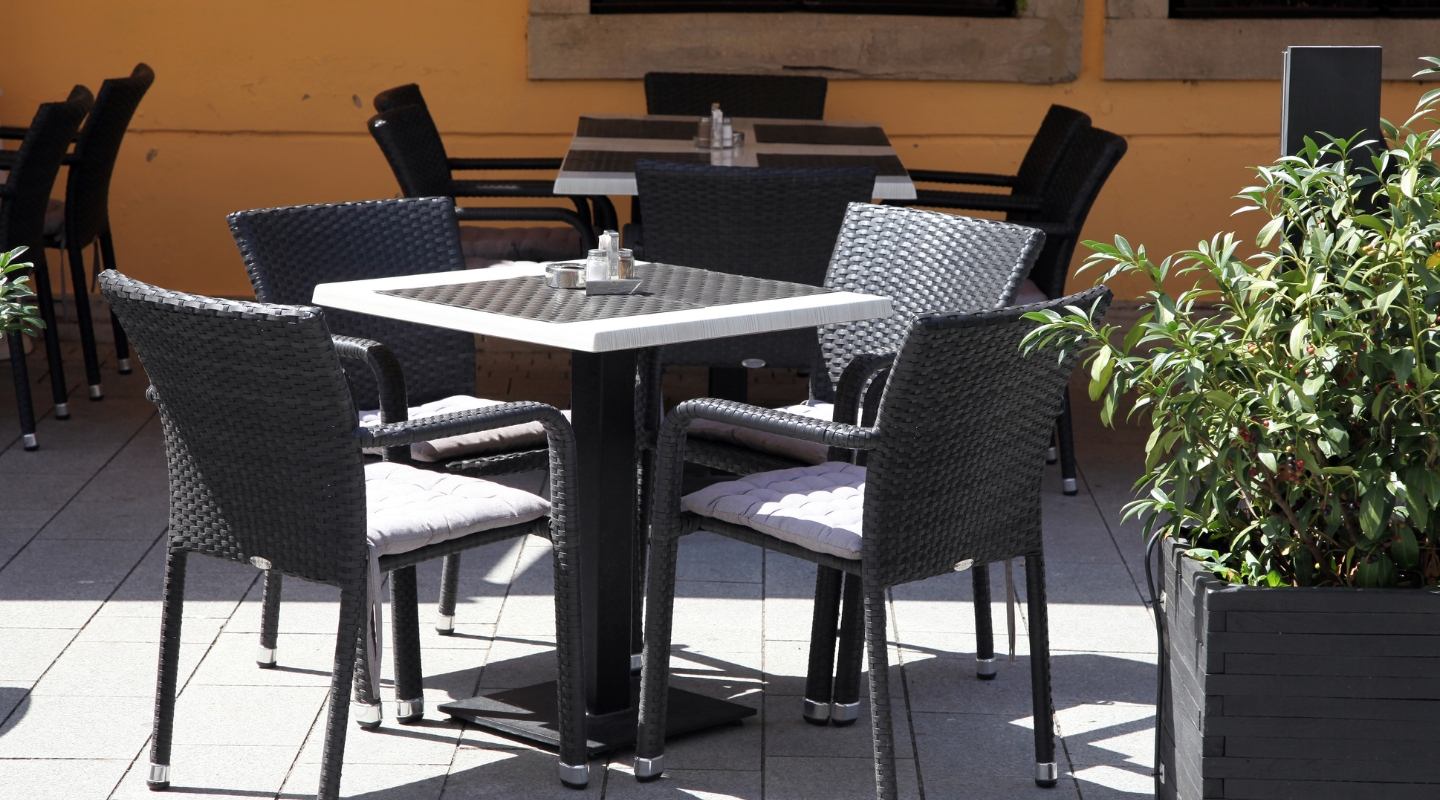
Synthetic Rattan: Style with Improved Weather Resistance
Rattan-inspired furniture remains a popular choice for outdoor dining spaces thanks to its relaxed, resort-like aesthetic. However, traditional natural rattan is not suitable for long-term outdoor exposure.
Modern hospitality furniture uses synthetic rattan fibres woven around aluminium frames to achieve the same visual effect while improving durability.
These synthetic fibres are designed to resist UV damage, moisture and mould growth, making them far more practical for outdoor settings.
Rattan-style furniture works especially well in cafés, rooftop bars and beachside restaurants where atmosphere plays an important role in the guest experience.
Design flexibility is another advantage. Synthetic rattan can be woven into a variety of shapes, allowing for lounge seating, curved sofas and comfortable armchairs.
When paired with weather-resistant cushions, it creates a welcoming environment that encourages guests to relax and stay longer.
Maintenance Considerations for Outdoor Furniture
Even the most durable outdoor materials benefit from regular maintenance. Simple care routines help preserve both structural integrity and appearance over time.
Restaurants should consider implementing the following maintenance practices:
Regular cleaning to remove dust, food residue and environmental debris
Checking joints or screws periodically for stability
Protecting furniture with covers during extended periods of heavy rain
Storing lightweight furniture indoors during severe weather when possible
These basic steps significantly extend the lifespan of outdoor seating.
Different materials require slightly different care routines. Teak may benefit from occasional oil treatment, while aluminium and HDPE typically only require mild soap and water for cleaning.
Designing Comfortable and Functional Outdoor Seating
Material selection is only one part of successful outdoor dining design. Layout planning and seating comfort also influence how effectively a space operates.
Restaurants should consider factors such as airflow, shade and guest movement when planning outdoor seating arrangements.
Well-designed outdoor dining areas often incorporate a mix of furniture styles. Dining tables can be complemented by lounge seating or bar-height tables to create varied experiences for different groups of guests.
Choosing durable furniture allows operators to focus more on creating an inviting environment rather than worrying about constant repairs or replacements.
Working with experienced hospitality furniture providers such as Rasa Bloom ensures that material selection, durability considerations and design aesthetics are aligned with operational needs.
Long-Term Value of High-Quality Outdoor Furniture
Outdoor seating can significantly increase a restaurant’s revenue potential by expanding available dining space. However, poorly constructed furniture can quickly undermine that opportunity through frequent repairs or replacement costs.
Investing in reliable commercial grade restaurant furniture ensures that outdoor seating areas remain attractive, comfortable and safe for guests over time.
When materials such as aluminium, teak, HDPE and synthetic rattan are chosen carefully, outdoor dining spaces can maintain their visual appeal while withstanding years of daily use.
Restaurants that prioritise quality materials ultimately benefit from reduced maintenance expenses and a more consistent customer experience.
Frequently Asked Questions
1. What is the most durable material for outdoor restaurant furniture?
Aluminium and HDPE are among the most durable materials for outdoor use because they resist rust, moisture and UV damage while requiring minimal maintenance.
2. Is teak furniture suitable for outdoor restaurants?
Yes. Teak is naturally resistant to moisture and decay, making it an excellent choice for outdoor dining areas. It also develops a distinctive weathered appearance over time.
3. Does synthetic rattan last outdoors?
Synthetic rattan designed for hospitality furniture is built to withstand sunlight, humidity and rain. When constructed around aluminium frames, it performs well in outdoor environments.
4. How often should outdoor restaurant furniture be maintained?
Basic cleaning should be done regularly, while structural checks such as tightening screws or inspecting joints can be performed every few months.