

Corporate Cafeteria & Staff Dining Room Furniture Singapore: Productive, Comfortable & Cost-Effective Solutions
In Singapore’s fast-paced corporate environment, employee well-being and productivity are increasingly linked to workplace design. While offices often focus on workstations and meeting rooms, staff dining areas are just as important. A well-designed cafeteria is more than a place to eat—it is a space for relaxation, informal collaboration, and recharging during the workday.
Selecting the right furniture plays a key role in shaping this environment. Companies planning commercial dining furniture, working with a food court furniture supplier, or considering flexible seating such as stackable restaurant chairs must balance comfort, durability, and cost efficiency. This guide explores how to design corporate dining spaces that support both employee satisfaction and operational practicality.
The Changing Role of Corporate Dining Spaces
Corporate cafeterias are no longer purely functional areas. Today, they serve multiple purposes, from casual meetings and team discussions to individual downtime. This shift has influenced how these spaces are designed and furnished.
Employees expect environments that feel comfortable and inviting, similar to modern cafés. At the same time, businesses need solutions that are efficient and easy to maintain. Furniture must therefore support both human experience and operational requirements.
Designing for Comfort Without Compromising Efficiency
Comfort is essential in staff dining areas, but it must be balanced with practicality. Seating should provide adequate support for short breaks without encouraging prolonged occupancy during peak hours.
Ergonomic chairs and thoughtfully designed tables contribute to a pleasant dining experience. Materials and finishes should feel welcoming while remaining durable enough for daily use.
For organisations investing in commercial dining furniture, achieving this balance is key to creating a space that employees actually enjoy using.
Space Planning for High-Traffic Periods
Corporate cafeterias often experience peak usage during lunch hours. Poor layout planning can lead to congestion, long waiting times, and a less enjoyable experience.
Efficient layouts should allow smooth movement between serving areas, seating zones, and exits. Clear pathways and well-organised seating arrangements help reduce bottlenecks.
Working with an experienced food court furniture supplier can provide valuable insights into optimising space for both capacity and flow.
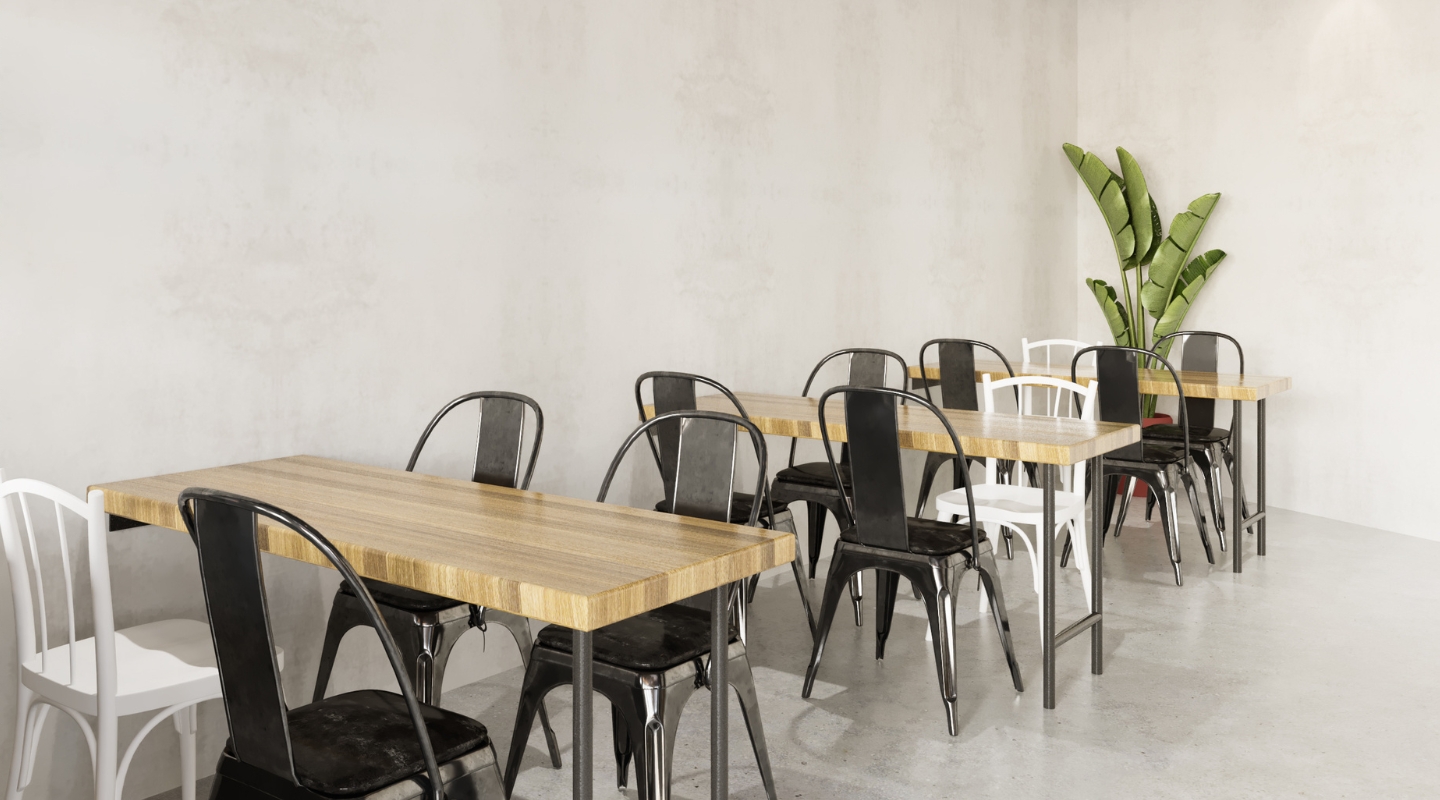
Flexible Seating for Dynamic Work Environments
Modern workplaces are becoming more flexible, and dining spaces need to reflect this trend. Furniture that can be easily rearranged allows companies to adapt their spaces for different needs.
Stackable restaurant chairs are particularly useful in this context. They can be stored when not in use, making it easier to reconfigure the space for events or cleaning. Lightweight tables and modular seating also contribute to flexibility.
This adaptability ensures that the cafeteria can serve multiple functions beyond dining.
Material Selection for Durability and Maintenance
Corporate dining areas require furniture that can withstand frequent use while remaining easy to maintain. Materials should be resistant to stains, scratches, and wear.
Surfaces that are simple to clean help maintain hygiene standards, especially in shared environments. At the same time, finishes should retain their appearance over time to avoid a worn-out look.
Choosing the right commercial dining furniture ensures long-term performance and reduces maintenance costs.
Creating a Welcoming Atmosphere
While functionality is important, the overall atmosphere of the cafeteria should not be overlooked. A well-designed space can have a positive impact on employee morale and satisfaction.
Colour schemes, textures, and furniture styles should align with the company’s brand identity. Incorporating elements such as natural materials or soft lighting can make the space feel more inviting.
A comfortable and visually appealing dining area encourages employees to take meaningful breaks, which can improve productivity.
Supporting Collaboration and Social Interaction
Corporate cafeterias often serve as informal meeting spaces where employees can connect and exchange ideas. Furniture should support this type of interaction.
Communal tables, booth seating, and flexible arrangements make it easier for groups to gather. At the same time, smaller tables provide options for individuals or small teams.
Balancing these different seating types creates a versatile environment that caters to diverse needs.
Cost-Effective Solutions for Businesses
Budget considerations are always important, especially for large organisations managing multiple facilities. However, cost savings should not come at the expense of quality.
Investing in durable furniture reduces the need for frequent replacements, resulting in lower long-term costs. Standardised designs can also help streamline procurement and maintenance.
Working with a reliable food court furniture supplier allows businesses to identify cost-effective solutions that meet both budget and performance requirements.
Sustainability in Corporate Furniture Choices
Sustainability is becoming a priority for many companies in Singapore. Furniture selection is one area where businesses can make environmentally responsible choices.
Options such as responsibly sourced materials, recyclable components, and long-lasting designs contribute to sustainability goals. These choices not only reduce environmental impact but also enhance corporate reputation.
Integrating sustainable practices into furniture selection reflects a forward-thinking approach to workplace design.
Technology Integration in Dining Spaces
As workplaces become more connected, dining areas are also evolving to support technology use. Employees may use these spaces to check emails, attend virtual meetings, or collaborate on projects.
Furniture that accommodates these activities—such as tables with integrated power access—adds convenience and functionality. This is particularly relevant in hybrid work environments.
Thoughtful design ensures that the cafeteria remains relevant in a digitally connected workplace.
Common Mistakes to Avoid
Designing a corporate dining space involves multiple considerations, and certain mistakes can reduce its effectiveness.
Common Pitfalls
- Overcrowding the space with too many tables
- Choosing furniture that is difficult to maintain
- Ignoring employee comfort and ergonomics
- Lack of flexibility in seating arrangements
- Focusing only on cost rather than long-term value
Avoiding these issues helps create a more functional and enjoyable environment.
Future Trends in Corporate Cafeteria Design
Corporate dining spaces are expected to become more versatile and experience-driven. Companies are increasingly viewing these areas as extensions of their workplace culture.
Trends such as modular furniture, hybrid seating arrangements, and sustainable materials will continue to shape design decisions. Flexibility and adaptability will remain key priorities.
Businesses that invest in well-designed dining spaces can enhance employee satisfaction and strengthen their overall workplace experience.
Frequently Asked Questions (FAQs)
1. What type of furniture is best for corporate cafeterias?
Durable, easy-to-maintain furniture with ergonomic design is ideal for daily use.
2. Why are stackable chairs useful in dining areas?
They provide flexibility, making it easier to adjust layouts and manage space.
3. How can I improve cafeteria layout efficiency?
Focus on clear pathways, balanced seating arrangements, and smooth traffic flow.
4. Is it worth investing in higher-quality furniture?
Yes, it reduces long-term maintenance and replacement costs.
Conclusion
Corporate cafeterias play a vital role in supporting employee well-being and workplace culture. By selecting the right commercial dining furniture Singapore and incorporating flexible options like stackable restaurant chairs, businesses can create dining spaces that are both practical and inviting.
With thoughtful planning and the right furniture choices, a staff dining area can become a valuable asset—enhancing productivity, encouraging collaboration, and contributing to a positive workplace environment.