

Commercial Bar Stool Materials Comparison: Steel, Wood, Rattan & Polyurethane
Selecting the right bar stools is a critical decision for any bar, pub, or restaurant in Singapore. While design and style often capture initial attention, material choice ultimately determines how well the furniture performs over time. In high-traffic F&B environments, bar stools are constantly in use, exposed to spills, humidity, and frequent cleaning. Choosing the wrong material can lead to premature wear, higher replacement costs, and an inconsistent customer experience.
This guide provides a practical comparison of four commonly used materials—steel, wood, rattan, and polyurethane—helping business owners make informed decisions based on durability, maintenance, comfort, and suitability for Singapore’s operating conditions.
Why Material Selection Matters in Singapore’s F&B Scene
Singapore’s climate presents unique challenges for furniture. High humidity, temperature fluctuations, and heavy usage demand materials that can withstand more than just daily wear. In addition, the fast-paced nature of bars and restaurants means furniture must be easy to maintain without disrupting operations.
Beyond functionality, materials also contribute to brand identity. A craft beer bar, for example, may lean towards industrial steel and wood, while a tropical-themed venue may incorporate rattan textures. Balancing aesthetics with performance is essential for long-term success.

Steel Bar Stools: Built for Strength and Longevity
Steel is widely regarded as one of the most durable materials for commercial seating. Its strength makes it particularly suitable for high-volume venues such as busy bars and pubs.
Advantages of Steel
Steel bar stools are known for their resilience and low maintenance requirements. They are less likely to crack, warp, or degrade under heavy use, making them a reliable choice for demanding environments.
- Exceptional durability under constant use
- resistant to impact and structural stress
- Easy to clean and maintain
- Suitable for both indoor and semi-outdoor settings
Powder-coated finishes further enhance resistance to corrosion, which is especially important in Singapore’s humid climate.
Considerations
While steel offers many benefits, it can feel cold or industrial if not balanced with other materials. Adding wooden seats or cushions can soften the look and improve comfort.
Businesses exploring bar furniture Singapore options often include steel stools as a core component due to their practicality and long lifespan.
Wooden Bar Stools: Warmth and Versatility
Wood remains a popular choice for F&B furniture due to its timeless appeal and versatility. It works well across a wide range of concepts, from casual cafes to upscale bars.
Advantages of Wood
Wooden stools bring a sense of warmth and familiarity, making spaces feel more inviting. They can be finished in various tones to match different interior styles.
- Natural aesthetic that complements many themes
- Comfortable seating surface
- Customisable finishes and stains
- Works well in both modern and classic settings
Hardwoods such as oak, teak, and ash are commonly used for commercial applications due to their strength.
Considerations
Wood requires proper treatment to resist moisture and prevent warping. In Singapore, untreated wood may deteriorate faster, especially in non-air-conditioned areas. Regular maintenance is necessary to preserve its appearance.
For those sourcing restaurant bar stools, treated hardwood options offer a good balance between durability and design flexibility.
Rattan Bar Stools: Texture and Tropical Appeal
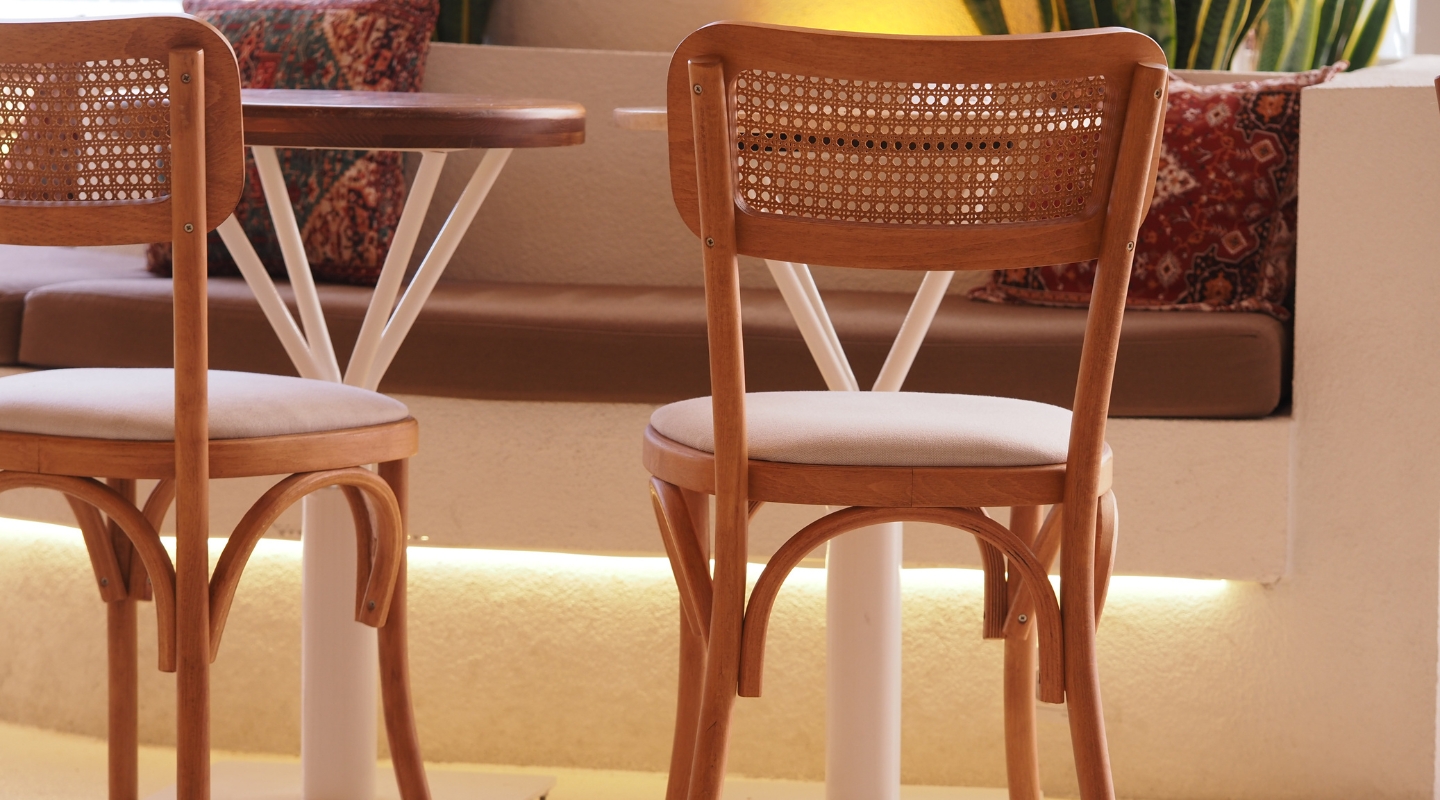
Rattan furniture has seen a resurgence in Singapore, particularly in venues that embrace natural or tropical design elements. Its lightweight structure and distinctive texture make it a visually appealing choice.
Advantages of Rattan
Rattan stools add character and a relaxed atmosphere, making them ideal for cafes, beach bars, and alfresco dining spaces.
- Lightweight and easy to reposition
- Unique texture that enhances visual interest
- Suitable for tropical or biophilic design concepts
- Comfortable without heavy cushioning
Synthetic rattan variants are often used in commercial settings due to their improved durability.
Considerations
Natural rattan may be sensitive to prolonged exposure to moisture and heavy use. Synthetic alternatives provide better resistance but may lack the authenticity of natural materials.
For venues incorporating durable cafe chairs Singapore into their design, rattan can be an excellent accent material when used strategically rather than as the primary seating option.
Polyurethane Bar Stools: Comfort and Practicality
Polyurethane (PU) seating has become increasingly popular in modern F&B environments due to its balance of comfort and ease of maintenance. Often used as upholstery material, PU provides a leather-like appearance without the associated upkeep.
Advantages of Polyurethane
PU stools are designed for comfort while remaining practical for busy operations. They are particularly suited for venues where customers are expected to stay longer.
- Soft and comfortable seating surface
- مقاistant to spills and easy to wipe clean
- Available in various colours and finishes
- More affordable than genuine leather
This makes PU a strong contender for bars aiming to combine style with functionality.
Considerations
Over time, lower-quality PU may peel or crack, especially under heavy use. Investing in higher-grade materials is essential to ensure longevity.
Operators looking for commercial dining furniture often consider PU seating for areas where comfort is a priority, such as lounge-style bar sections.
Comparing the Materials: Which Works Best?
Each material offers distinct advantages, and the best choice often depends on the specific needs of the venue. Rather than selecting a single material, many successful bars combine different types to create a balanced environment.
Quick Comparison Overview
- Steel: Best for durability and heavy usage
- Wood: Ideal for warmth and design flexibility
- Rattan: Suitable for aesthetic appeal and lighter use
- Polyurethane: Excellent for comfort and easy maintenance
Combining steel frames with wooden or PU seats, for example, can deliver both strength and comfort while maintaining a cohesive look.
Matching Materials to Bar Concepts
Different bar concepts call for different material strategies. Understanding how each material aligns with your brand helps create a more cohesive and memorable space.
Craft Beer Bars
Industrial materials such as steel and wood work particularly well, reflecting the authenticity and craftsmanship associated with brewing.
Cocktail Bars
A mix of upholstered PU seating and refined wooden elements can create a more polished and comfortable environment.
Outdoor and Alfresco Bars
Weather-resistant materials such as powder-coated steel and synthetic rattan are better suited for Singapore’s outdoor conditions.
Casual Pubs
Durability is key, making steel and treated wood practical choices for high turnover and frequent use.
Working with an experienced supplier like Rasa Bloom allows businesses to customise combinations that align with both operational needs and design goals.
Maintenance Tips for Long-Term Performance
Regardless of material, proper maintenance plays a crucial role in extending the lifespan of bar stools. Simple routines can significantly reduce wear and tear.
- Clean spills immediately to prevent staining
- Use appropriate cleaning products for each material
- Inspect joints and fastenings regularly
- Rotate seating positions to distribute wear evenly
Investing in quality furniture from the start reduces the need for frequent replacements and ensures a consistent customer experience.
Making the Right Investment Decision
Furniture should be viewed as a long-term investment rather than a short-term expense. While lower-cost options may seem attractive initially, they often result in higher replacement and maintenance costs over time.
Choosing high-quality materials that suit Singapore’s climate and operational demands ensures better value and reliability. Businesses seeking dependable solutions can explore curated collections from Rasa Bloom, known for delivering furniture tailored to the needs of the local F&B industry.
Frequently Asked Questions
Which bar stool material is most durable for Singapore bars?
Steel is generally the most durable option, especially when powder-coated to resist corrosion. It performs well in high-traffic environments.
Are wooden bar stools suitable for humid climates?
Yes, but only if they are properly treated and sealed. Untreated wood may warp or deteriorate more quickly in humid conditions.
Is polyurethane better than leather for bar seating?
Polyurethane is more practical for commercial use as it is easier to clean and maintain, while still offering a similar appearance to leather.
Can I mix different bar stool materials in one space?
Yes, combining materials can enhance both functionality and visual appeal, provided the overall design remains cohesive.