

Restaurant Table Height Standards Singapore F&B Guide
Table height is one of the most overlooked yet critical elements of restaurant design. When tables are too low, customers hunch uncomfortably. When they are too high, diners strain their shoulders and arms. Poor table dimensions affect posture, dining enjoyment, and even customer turnover rates. In Singapore’s competitive F&B landscape, selecting the right table height is essential for delivering a quality dining experience and maintaining operational efficiency.
This guide explores the recommended table height standards, ergonomic principles, and practical considerations when choosing restaurant tables and chairs in Singapore. Whether you run a café, hawker stall, casual restaurant, or fine dining establishment, these guidelines will help you create a comfortable and functional dining environment that supports both customer satisfaction and business flow.
Why Table Height Matters in Restaurant Ergonomics
Table height directly influences diners’ comfort, posture, and interaction. Even with high-quality chairs, mismatched table heights lead to awkward seating positions that can negatively impact customer experience.
Poor table height can result in:
Shoulder strain due to elevated arms
Slouching caused by excessively low tables
Limited legroom
Difficulty reaching food or cutlery
Reduced dining duration, affecting sales
In contrast, tables built according to ergonomic standards ensure natural posture, encourage longer dining times when appropriate, and elevate the overall dining ambiance. Choosing properly sized tables also ensures compatibility with commercial dining furniture in Singapore, which typically follows industry-standard measurements.
Standard Table Height for Restaurants in Singapore
Across most F&B establishments, table height typically follows international ergonomic standards, adapted for Asian body proportions and dining behaviours.
Standard dining table height: 710–760 mm
This range accounts for the average seated elbow height and provides a comfortable resting position for forearms while dining.
Restaurants should pair table height with appropriate seat heights to maintain optimal comfort. The typical vertical distance between seat and table—known as the “seat-to-table clearance”—should be 250–300 mm.

Table Height for Different F&B Concepts
Different dining formats require slight variations in height depending on customer behaviour, dining duration, and seating design. Below are recommended standards for various Singapore F&B environments.
Café and Casual Dining Table Heights
Cafés often encourage customers to sit for longer periods—enjoying coffee, working remotely, or chatting with friends. Therefore, tables must support comfort without promoting slouching or fatigue.
Recommended height: 720–740 mm
This height works well with cushioned or wooden chairs typically used in casual dining spaces. The ergonomics encourage natural posture, supporting laptop use or long conversations without discomfort.
Fast-Casual and Quick Service Restaurants (QSR)
These outlets focus on fast dining and efficient turnover, meaning table dimensions must facilitate upright posture and quick movement.
Recommended height: 710–730 mm
The slightly lower height supports minimalist chairs and reduces lounging behaviour, striking a balance between comfort and operational goals.
Fine Dining Restaurants
Fine dining establishments prioritise luxury, comfort, and elegance. Upholstered chairs with armrests are common, requiring careful pairing with table height.
Recommended height: 730–760 mm
Tables must provide excellent clearance for upholstered chairs, while maintaining premium aesthetics. In fine dining, table height plays a major role in maintaining proper posture during multi-course meals.
Hawker Centres and Kopitiam Settings
Standardised furniture is widely used in hawker centres to ensure easy cleaning and maintenance. Lightweight moulded tables and stools dominate these spaces.
Recommended height: 700–730 mm
This slightly lower height accommodates fixed stools and moulded seats, which are often shorter than conventional dining chairs.
Looking for more guides related to kopitiam and hawker setups? Refer to our previous article:
Successful Hawker Centre Modernization Furniture Project

Table Height for Bar Counters and High Dining Tables
Many modern Singapore cafés, bars, and fusion restaurants incorporate high tables to create visual interest and dynamic seating.
Bar counter height: 1000–1100 mm
Bar table height: 900–1000 mm
Bar stool height to match: 650–820 mm (depending on counter height)
The important rule is to ensure 300 mm height difference between seat and table for comfortable posture.
Tabletop Thickness and Its Impact on Height
A common oversight is ignoring tabletop thickness when choosing table height. A thick tabletop (especially marble or solid wood) reduces leg clearance, affecting comfort.
Typical tabletop thickness:
Laminate tops: 18–25 mm
Solid wood tops: 25–40 mm
Marble or stone tops: 20–30 mm
When using thick tops, ensure that the supporting frame maintains minimum clearance of 600–650 mm under the table.
Matching Chairs with Table Height
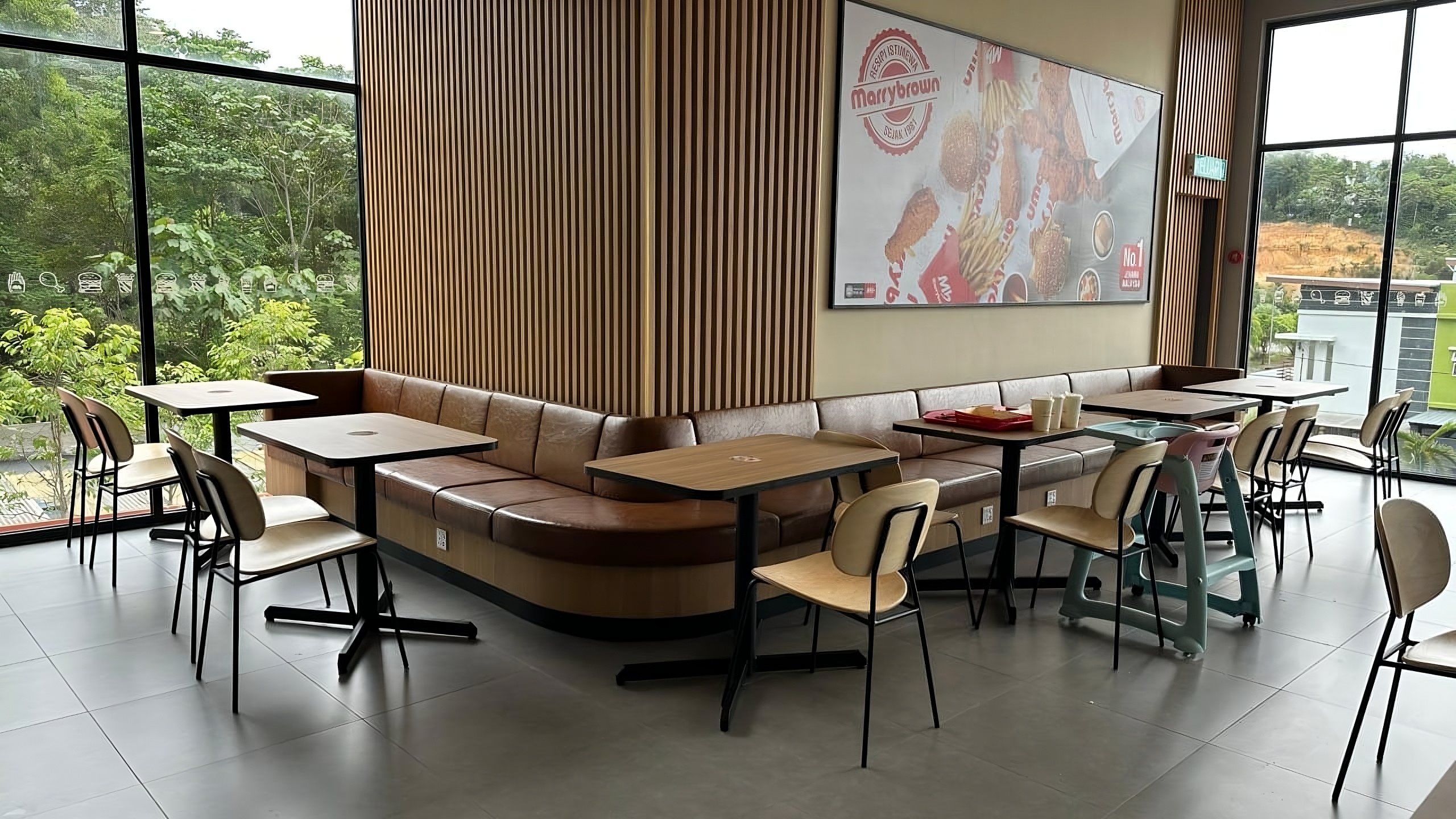
Selecting the right chairs is essential for creating a cohesive and ergonomic seating arrangement. Mismatched chairs and tables are a common mistake among new restaurant owners.
Ideal chair seat height: 430–480 mm
This should form a consistent seat-to-table gap of 250–300 mm—the golden rule of ergonomic dining.
For specialised concepts:
Lounges or bars: higher seats with added footrests
Outdoor areas: weather-resistant chairs with standard PP or metal frames
Compact dining spaces: chairs with upright backrests for better posture
When selecting restaurant tables and chairs, always check compatibility before making a bulk purchase.
Accessibility and Universal Design Considerations
Singapore’s F&B establishments must also consider accessibility, especially for wheelchair users and elderly diners. Ensuring compliance with universal design standards promotes inclusivity and enhances customer trust.
Recommended specifications:
Table height for wheelchair access: 700–750 mm
Knee space clearance: 700 mm width x 480 mm depth
Wheelchair-friendly aisle width: 900–1200 mm
Restaurants that follow these standards not only meet accessibility expectations but also create a welcoming environment for families and elderly customers.
Outdoor vs Indoor Table Height Considerations
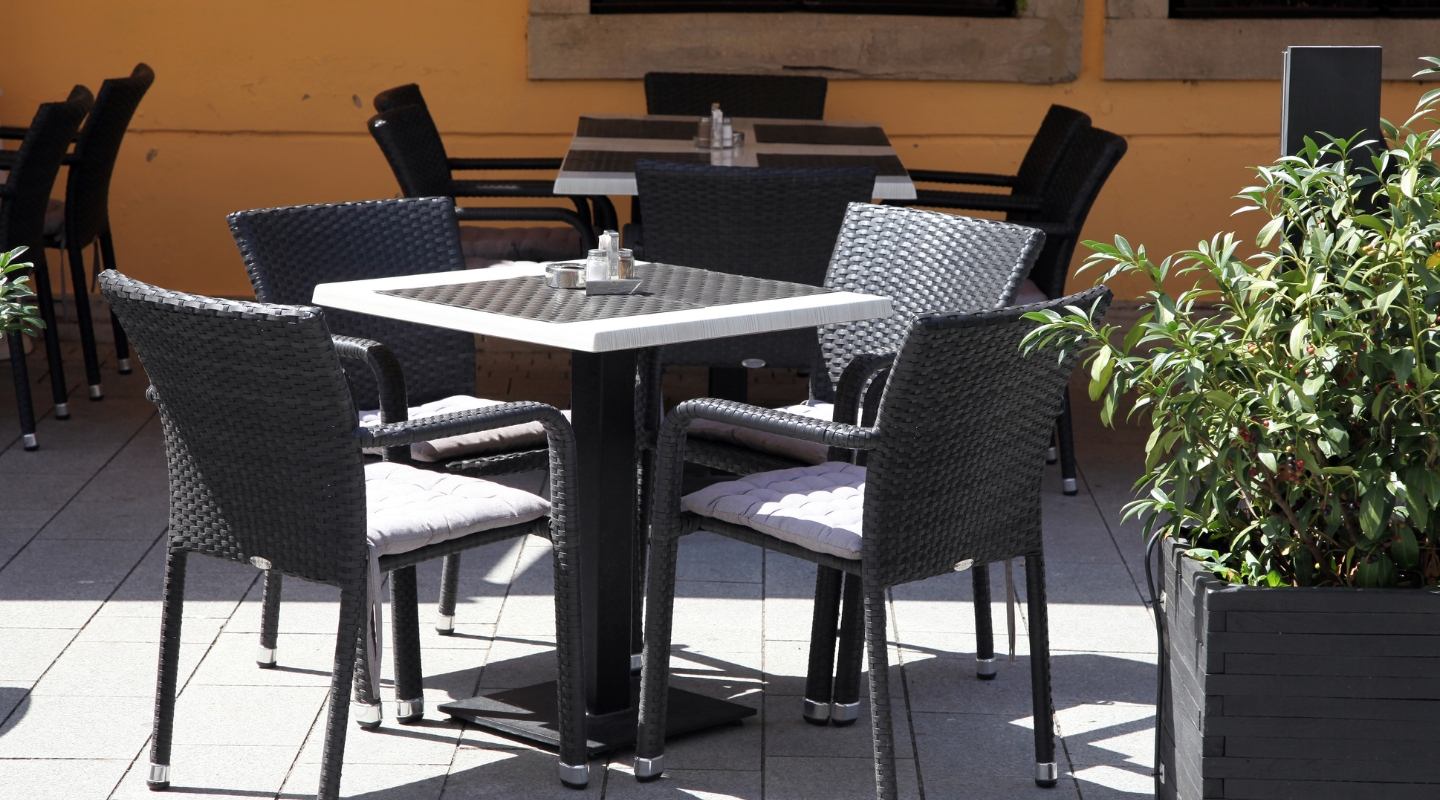
Outdoor tables require additional considerations due to environmental factors.
Outdoor table guidelines:
Maintain standard heights (710–760 mm) for ergonomic consistency
Choose weather-resistant materials like aluminium, PP, or stainless steel
Ensure anti-slip leg bases due to uneven flooring
Consider UV protection for long-term durability
Indoor tables allow for thicker tops and heavier bases, whereas outdoor tables often prioritise functionality and weather resistance.
Commercial Dining Furniture Materials and Construction
The material and construction of tables significantly affect structural stability and comfort.
Common table materials used in commercial dining furniture in Singapore include:
Laminate: affordable, durable, and ideal for fast-casual restaurants
Solid wood: premium appearance, suited for cafés and fine dining
Compact laminate (HPL): highly durable and great for indoor-outdoor flexibility
Marble/Stone: luxurious, best for upscale concepts
Stainless steel: hygienic and used in hawker and industrial-style eateries
The choice of material influences the frame design, leg clearance, and table stability—all of which affect ergonomic performance.
Stability and Wobble Control in Restaurant Tables
Wobbling tables are one of the biggest customer complaints. Poor stability can ruin the dining experience, especially when serving soup, hot drinks, or multi-course meals.
Key stability factors:
Wide base or four-leg support
Even weight distribution
High-quality screws and joints
Adjustable glides for uneven floors
Strong frame construction
Commercial-grade tables supplied by reputable providers like Rasa Bloom undergo durability testing to ensure long-term stability.
How Rasa Bloom Supports Proper Table Height Standards
As a trusted provider of restaurant tables and chairs in Singapore, Rasa Bloom helps F&B businesses achieve the perfect balance of aesthetics, comfort, and operational efficiency. With extensive experience in café, restaurant, and commercial dining solutions, the company offers:
Custom table height configurations
Ergonomic seating solutions matching table dimensions
Commercial-grade materials suitable for Singapore’s climate
Space planning consultations
Durable bases and tops to ensure long-term performance
Rasa Bloom’s comprehensive approach ensures that every restaurant receives perfectly matched tables and chairs that enhance comfort, safety, and customer satisfaction.
Frequently Asked Questions
1. What is the standard restaurant table height in Singapore?
Most dining tables follow a height of 710–760 mm, which aligns with ergonomic guidelines for seated dining comfort.
2. How high should bar tables be?
Bar tables typically range from 900–1100 mm, depending on the bar stool height and dining concept.
3. How do I know if my chairs match my tables?
Ensure a seat-to-table clearance of 250–300 mm, and test chair comfort with table height before purchasing in bulk.
4. Does tabletop thickness affect table height?
Yes. Thick tops reduce knee clearance, so select frames that maintain a minimum of 600–650 mm under-table space.