

Restaurant Lighting and Furniture Coordination Singapore: Design That Works
The atmosphere of a restaurant often determines whether customers come back for another visit—or not. While the menu and service are key, one element that subtly shapes every diner’s experience is lighting and furniture coordination.
In Singapore’s highly competitive F&B market, where design and experience influence dining choices, mastering the balance between lighting and furniture is an art form. Well-coordinated interiors create an inviting ambiance, improve functionality, and reinforce your restaurant’s brand story.
In this guide, we’ll explore how lighting and furniture work together to create a memorable dining experience, with insights from Rasa Bloom, a leading restaurant furniture supplier in Singapore.
Why Lighting and Furniture Coordination Matters
Lighting and furniture define the mood and usability of your dining space. When properly balanced, they:
Enhance visual harmony and brand identity
Improve customer comfort and perception
Highlight textures, materials, and finishes of furniture
Create zones for different dining experiences
Support operational efficiency for staff and diners
In short, coordinated lighting and furniture elevate both the aesthetic appeal and functionality of your restaurant.
1. Understanding Restaurant Lighting Basics
Lighting is more than illumination—it’s atmosphere design. In restaurant settings, lighting influences emotions, appetite, and even how food looks on the table.
There are three main types of lighting every restaurant should balance:
Ambient Lighting
This is your base light—the foundation of visibility. It sets the overall tone of the restaurant and determines brightness levels. Common examples include ceiling-mounted fixtures, chandeliers, and recessed lighting.
Task Lighting
Designed for functionality, task lighting focuses on specific activities like dining, cooking, or cashier operations. Pendant lights above tables or bar counters are common examples.
Accent Lighting
Accent lighting adds drama and highlights decor features—like a textured wall, an art piece, or a signature logo. It’s what gives your restaurant personality and warmth.
A well-coordinated lighting plan integrates all three types to create depth and mood consistency throughout the dining space.
2. The Relationship Between Lighting and Furniture
Lighting and furniture should complement each other—not compete. The right lighting enhances the furniture’s textures, colors, and shapes, while well-chosen furniture reflects and diffuses light beautifully across the space.
Think of it this way: lighting paints the room, while furniture frames it. When they work together, the result is cohesive and immersive.
For example:
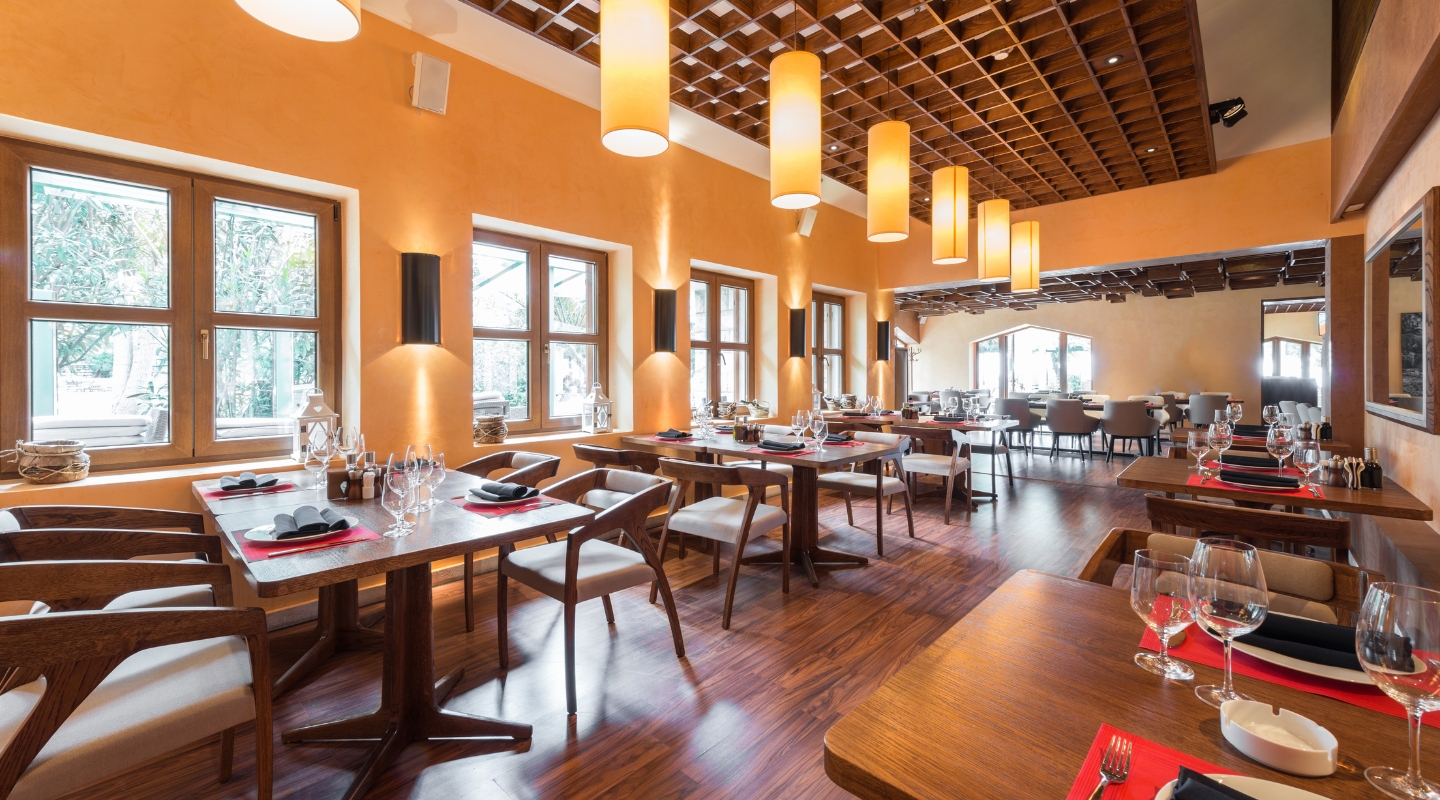
Wooden furniture pairs beautifully with warm white or amber lighting.
Metal and glass surfaces shine under cooler lighting tones.
Upholstered furniture benefits from soft diffused lighting to highlight fabric richness.
Rasa Bloom helps restaurant owners select furniture finishes that complement their chosen lighting style—creating a balanced, well-lit atmosphere that feels natural and inviting.
3. Defining Your Restaurant’s Mood Through Lighting
Every restaurant concept carries a unique emotional tone. Lighting choices should match that mood to ensure brand consistency.
Here’s how lighting can align with different restaurant styles:
Fine Dining: Soft, dimmable lighting for intimacy and elegance. Warm tones flatter both people and food.
Cafés: Natural lighting during the day and cozy pendant lighting at night for casual comfort.
Fast-Casual Restaurants: Bright, functional lighting that supports quick turnover and visibility.
Bars and Lounges: Layered lighting with accent glows and dynamic tones for a vibrant, social vibe.
A consistent lighting mood creates a memorable brand experience that keeps diners coming back.
4. Color Temperature and Its Impact on Furniture
The color temperature of lighting (measured in Kelvin) affects how your furniture looks and how customers feel.
| Lighting Type | Kelvin Range | Mood Created | Best For |
|---|---|---|---|
| Warm White | 2700K–3000K | Cozy, inviting, relaxed | Cafés, fine dining |
| Neutral White | 3500K–4100K | Balanced, bright, clear | Family dining, food courts |
| Cool White | 5000K–6500K | Clean, modern, energetic | Fast food, open kitchens |
Warm lighting enhances wooden furniture, neutral tones work well with mixed materials, and cool lighting suits metal or modern minimalist spaces.
When you source furniture from Rasa Bloom, material selection can be optimized for the lighting tone you plan to use—ensuring your chairs, tables, and decor look their best under real-world conditions.
5. Using Lighting to Highlight Furniture Features
Strategic lighting can emphasize your restaurant’s most attractive furniture and design details.
Here are a few ideas:
Spotlights on statement chairs or centerpiece tables create a focal point.
Wall sconces can highlight booth seating or textured walls.
Pendant lights above dining tables create intimate “islands” of light for each group.
LED strip lights along bar counters or under banquette seating add modern flair.
When your furniture and lighting complement each other, even a simple dining setup can feel luxurious.
6. Spatial Planning: Light Distribution and Furniture Layout
Lighting must align with the physical layout of your restaurant. Poorly distributed lighting can cause glare or shadows that disrupt comfort and dining flow.
Practical tips for light-furniture coordination:
Align pendant lights directly above tables for balanced illumination.
Keep consistent spacing between lights to maintain visual rhythm.
Avoid harsh spotlights over glossy furniture surfaces—they cause unwanted reflections.
Combine ceiling and wall lights for even distribution in compact areas.
Rasa Bloom often works with designers and contractors to ensure table and chair layouts match light positioning, achieving symmetry and comfort in every corner of the restaurant.
7. Choosing Furniture Finishes That Work With Light
Lighting can either elevate or distort furniture finishes, depending on how materials reflect or absorb light.
Here’s how to choose finishes that complement your lighting design:
Matte finishes: Reduce glare, ideal for bright lighting.
Glossy finishes: Reflect light well, adding depth in dim environments.
Textured surfaces: Add character under directional lighting.
Light-colored fabrics: Brighten dim areas naturally.
If your restaurant relies on warm, moody lighting, opt for darker furniture tones with subtle sheen. For well-lit interiors, lighter wood or neutral upholstery keeps the space airy and open.
8. Energy Efficiency and Modern Lighting Technology
In Singapore, where operational costs are high, energy-efficient lighting isn’t just eco-friendly—it’s good business.
Modern LED lighting systems reduce energy consumption by up to 70% compared to traditional bulbs. Smart lighting controls also allow restaurants to adjust brightness or color temperature throughout the day, creating dynamic moods without wasting energy.
Combine energy-saving lighting with durable, long-lasting furniture from Rasa Bloom, and you’ll build an environmentally conscious restaurant that aligns with modern sustainability standards.

9. Integrating Natural Light with Furniture Design
Natural lighting is one of the most powerful tools in restaurant design, especially in Singapore’s sunny climate.
To maximize natural light:
Position seating near windows to make use of daylight.
Use sheer curtains or blinds to diffuse harsh light.
Choose furniture with lighter tones to reflect natural brightness.
Avoid high-gloss surfaces that cause glare under sunlight.
Daylight enhances visual appeal, reduces artificial lighting needs, and makes your restaurant feel open and welcoming.
10. Lighting for Outdoor Dining Areas
Outdoor dining continues to thrive in Singapore’s tropical weather, making outdoor lighting crucial for safety and mood.
Consider the following lighting strategies:
String lights: Add a festive, cozy charm for patios and rooftops.
Lanterns or sconces: Create intimate warmth.
Ground-level LED strips: Illuminate pathways safely.
Solar-powered lighting: Sustainable and low-maintenance for alfresco areas.
Complement your lighting with weather-resistant furniture—such as Rasa Bloom’s metal, rattan, or polypropylene collections—to ensure both comfort and durability under Singapore’s humidity.
11. Coordinating Lighting With Seating Zones
Different areas of a restaurant serve different purposes—waiting zones, dining areas, bar counters, and private booths. Each requires a specific lighting tone and intensity.
Example layout:
Entrance & waiting area: Bright, welcoming lighting.
Main dining area: Moderate, comfortable lighting with balanced visibility.
Private booths: Dimmer, intimate lighting for privacy.
Bar area: Dynamic lighting with accents and reflections.
Rasa Bloom’s seating solutions can be planned according to these zones, ensuring each area’s furniture complements the intended mood.
12. Common Lighting and Furniture Coordination Mistakes
Avoid these frequent design pitfalls:
Mixing lighting temperatures (warm vs cool) inconsistently.
Placing pendant lights off-center from tables.
Overusing spotlights that create glare on shiny surfaces.
Ignoring how materials change appearance under lighting.
Choosing furniture colors before finalizing the lighting plan.
Proper coordination between furniture suppliers, interior designers, and electricians ensures your restaurant achieves harmony from concept to execution.
13. Why Partner with Rasa Bloom
As a trusted restaurant furniture supplier in Singapore, Rasa Bloom helps F&B businesses create cohesive, visually appealing, and functional interiors.
What makes Rasa Bloom stand out:
Wide range of customizable dining chairs, tables, and bar furniture
Guidance on lighting-furniture harmony and material reflection
Expertise in tropical-climate durability
Reliable delivery and setup support
Commitment to quality and design flexibility
Rasa Bloom doesn’t just sell furniture—it provides complete design solutions that elevate your restaurant’s atmosphere and brand appeal.
Conclusion
The relationship between restaurant lighting and furniture is essential to achieving ambiance, comfort, and efficiency. When planned with intention, lighting can enhance textures, complement materials, and define your restaurant’s mood.
Whether you’re opening a café, fine dining venue, or alfresco bar in Singapore, thoughtful lighting-furniture coordination ensures a consistent and memorable experience for every guest.
Visit Rasa Bloom to explore commercial-grade furniture collections designed to harmonize with your lighting concept and bring your restaurant’s vision to life.
Frequently Asked Questions
1. What lighting works best for wooden restaurant furniture?
Warm or neutral white lighting (2700K–3500K) enhances the natural warmth of wood and creates a cozy ambiance.
2. How can lighting improve my restaurant’s mood?
Different light tones and intensities can evoke emotions—soft lighting promotes relaxation, while brighter lighting encourages energy and conversation.
3. Should I finalize furniture or lighting first?
Ideally, plan both together. Material color, reflectivity, and layout affect lighting design, and vice versa.
4. Can Rasa Bloom assist in lighting coordination?
Yes. Rasa Bloom works with design consultants to recommend furniture finishes that complement your restaurant’s lighting scheme.